


Get a Quote
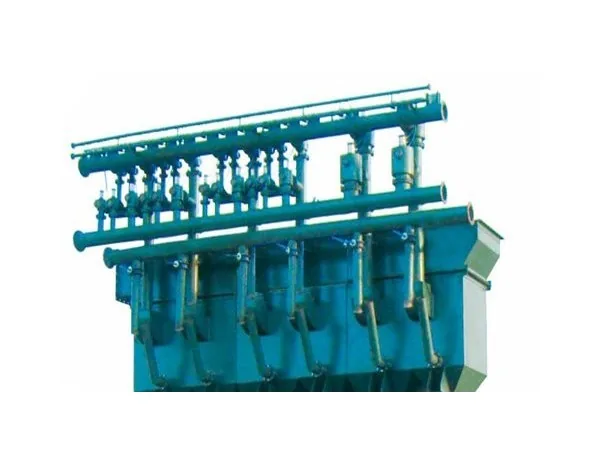


Grading clean coal into saleable fractions accurately, with screen media chosen for open area and wear life.
Product sizing is where the plant's output meets the market. A screen that grades inaccurately sends oversize into the fines product or fines into the lump product, and either way the buyer notices.
Accuracy depends on three things: the cut point relative to screen aperture, the bed depth on the deck, and the screen media. All three are adjustable at the design stage and expensive to change afterwards.
Dehui supplies single, double and triple deck linear vibrating screens for coal sizing, with screen media selected against the abrasion and moisture of the actual product.
Indicative values. Final figures follow from your coal analysis and site conditions.
| Parameter | Typical Range |
|---|---|
| ParameterTypical requirement Cut points | Commonly 13, 25, 50 mm — set by the sales specification |
| Decks | 1–3, one per product fraction |
| Screen media | Polyurethane, woven wire or punch plate |
| Bed depth | Controlled by feeder width and screen inclination |
| Moisture tolerance | Wet screening needs different media than dry |
Near-size particles are the enemy of accuracy. If a large share of the feed sits within ±25% of the cut point, expect more misplacement regardless of screen quality.
Polyurethane panels last longer and blind less on wet coal; woven wire gives more open area on dry duty. The choice is a trade, not a default.
Inclination changes both capacity and accuracy. Raising angle increases throughput and reduces residence time on the deck.
One per product fraction. A plant selling three sizes needs a triple-deck screen or two screens in series.
Usually worn or blinded media, excessive bed depth, or a cut point too close to the aperture tolerance. Each has a different fix.