


Get a Quote
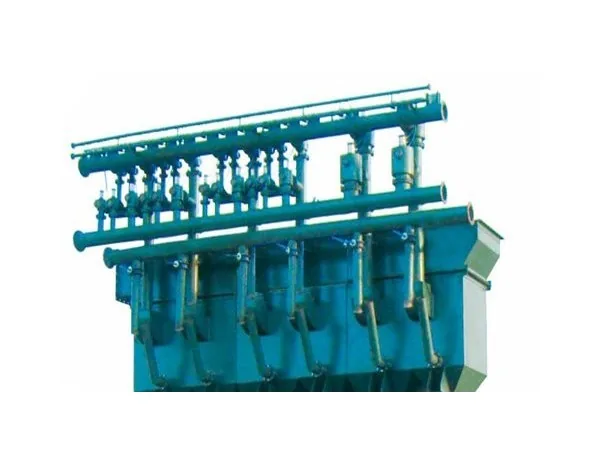


Deeper cleaning with middlings handling, for coking coals that need more than a single separation stage.
Coking coal often needs a sharper separation than a single-stage jig provides. Two-stage and three-stage jigs address this by separating clean coal, middlings and reject in one machine, with the middlings re-washed rather than discarded.
That extra stage buys yield. On a difficult coking coal, recovering the clean coal locked in middlings can be worth several percentage points of plant yield — which on a large plant outweighs the additional capital cost many times over.
Dehui specifies two-stage and three-stage jigs for coking coal duty, with the stage configuration and middlings route fixed from the washability curve at the target product ash.
Indicative values. Final figures follow from your coal analysis and site conditions.
| Parameter | Typical Range |
|---|---|
| ParameterTypical requirement Stages | Two or three, set by washability difficulty |
| Product ash | Commonly 8–10.5% |
| Middlings route | Re-wash in the same unit or in a separate circuit |
| Separation accuracy | Ep 0.05–0.10 for well-prepared coking coal feed |
| Feed preparation | Desliming ahead of the jig protects separation |
Desliming before jigging is not optional for coking coal. Fine slime raises the medium viscosity in the bed and degrades separation.
Three-stage jigs cost more and take more building height. The case for them rests entirely on the yield gain from middlings recovery.
Where the coal is very difficult to wash, dense medium may beat any jig configuration. We say so when the data points that way.
No. It only pays where middlings contain recoverable clean coal at the target ash. If they do not, the extra stage adds cost without yield.
On suitable coal, yes. Whether yours can be reached depends on the washability curve — we check it before committing to a jig-based route.