


Get a Quote
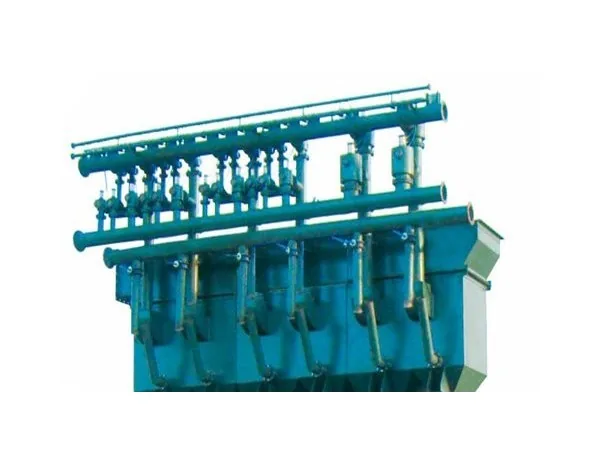


High-throughput thermal coal washing with stable ash control and low operating cost per tonne.
Power coal jigging is a volume business. The jig has to hold a steady product ash across a feed that changes through the shift, at the lowest possible cost per tonne washed.
Air-pulsated jigs suit this duty well: they accept a wide size range, tolerate variation in feed quality, and their operating cost is dominated by power and water rather than consumables.
The parameters that matter are stroke, frequency, bed depth and discharge rate. Dehui sets these against your washability curve at commissioning and documents the adjustment range so operators can respond to feed changes without guesswork.
Indicative values. Final figures follow from your coal analysis and site conditions.
| Parameter | Typical Range |
|---|---|
| ParameterTypical requirement Capacity | 100–600 t/h per unit |
| Feed size | 0–100 mm, or 0–50 mm for a narrower band |
| Product ash stability | Held within the power station contract band |
| Water consumption | 2.5–4 m³/t feed |
| Operating cost | Dominated by power; low consumable use |
Bed depth and discharge rate interact. Raising throughput without adjusting them is the most common cause of ash excursions.
Feed size consistency matters more than feed rate consistency. A widening size band changes separation behaviour even at constant tonnage.
Automatic discharge control is worth the cost on plants running variable feed, because manual adjustment always lags the change.
Up to roughly 600 t/h depending on feed size and the required separation precision. Beyond that, parallel units are usually more practical.
With automatic discharge control, within minutes. Manual adjustment typically lags by a shift, which is why ash excursions cluster around feed changes.