


Get a Quote
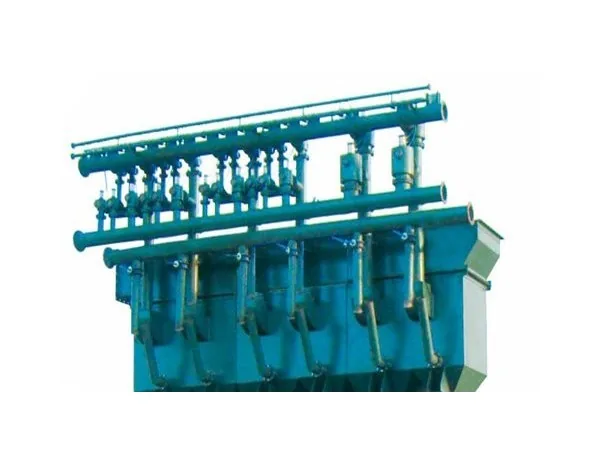


Recovering residual clean coal from reject streams — a small jig on a variable feed often beats a more precise but less tolerant circuit.
Reject streams from older washing plants frequently carry recoverable coal. Re-washing them in a dedicated small jig can add tonnage without touching the main plant's flow sheet.
This duty has particular characteristics: the tonnage is low, the feed composition is variable, and the objective is usually to recover a modest proportion of coal rather than to hit a precise ash target. That profile suits a jig better than a dense medium circuit, which would be over-specified and less tolerant of variation.
Dehui supplies small jigs for gangue re-wash duty, typically combined with a crushing stage to liberate locked particles first.
Indicative values. Final figures follow from your coal analysis and site conditions.
| Parameter | Typical Range |
|---|---|
| ParameterTypical requirement Capacity | 20–100 t/h, matched to the reject stream |
| Feed | Gangue with measurable locked coal content |
| Liberation | Crushing stage ahead of the jig, sized to the liberation size |
| Product | Recovered coal for blending or separate sale |
| Residue | Final reject, optionally graded as aggregate |
Measure the recoverable coal content first. Without that number there is no way to size the circuit or justify the investment.
Low tonnage does not mean low variability. A small jig with automatic discharge control handles this better than a manually adjusted one.
Blending the recovered coal back into the main product is usually more valuable than selling it separately, provided the ash allows.
From roughly 20 t/h. Below that, the economics of a dedicated jig usually do not close.
Usually as a blend component. Its ash is typically higher than the main product, so blending ratios have to be controlled.