


Get a Quote
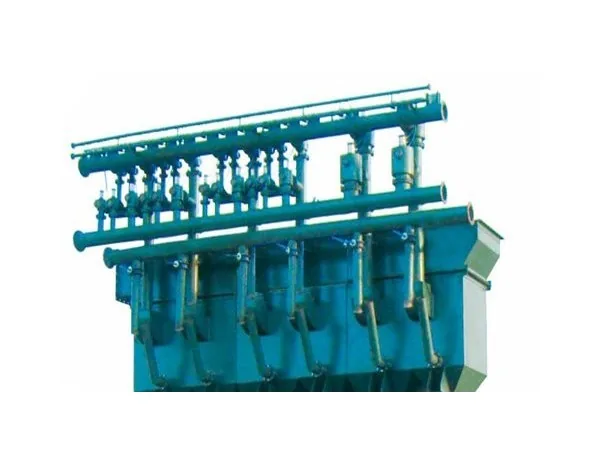


Thermal coal preparation from 200,000 to 5,000,000 TPY — raising calorific value and cutting ash to meet power station contracts.
Power coal washing has a simple commercial purpose: remove ash-bearing reject so the delivered coal carries more energy per tonne. Every percentage point of ash removed raises calorific value and reduces the transport cost per unit of energy delivered.
The flow sheet is usually jig-based, because jigs handle wide size ranges, tolerate feed variation and cost less to operate than dense medium circuits. The design work sits in the water balance: slime generation, thickener sizing and filter press capacity all have to match the crushing and washing decisions.
Dehui has delivered thermal coal lines from 200,000 TPY single-unit plants to 5,000,000 TPY multi-line installations. The 5 million TPY plant in Shanxi runs parallel jig lines with a shared slime water circuit.
Indicative values. Final figures follow from your coal analysis and site conditions.
| Parameter | Typical Range |
|---|---|
| ParameterTypical requirement Annual capacity | 200,000–5,000,000 TPY |
| Ash reduction | Typically 8–15 percentage points, set by the power station contract |
| Process route | Jig washing with closed-loop slime water treatment |
| Product moisture | 8–12% after dewatering screen and centrifuge |
| Water intake | Minimised by thickener and filter press recovery |
Contract ash is a hard limit, not a target. Design margin should account for the worst coal in the seam, not the average sample.
Slime handling capacity is the most common bottleneck in thermal coal plants. It should be sized from fines generation at the crushing stage, not from a rule of thumb.
Product moisture affects both contract price and transport cost. Dewatering performance deserves as much design attention as ash removal.
It depends on the ash content of the raw coal and the washability. Removing 10 percentage points of ash typically raises calorific value substantially, but the exact figure has to be calculated from your coal data.
Yes, with blending and appropriate design margin. Where seams differ sharply in washability, we design for the range rather than the average.