


Get a Quote
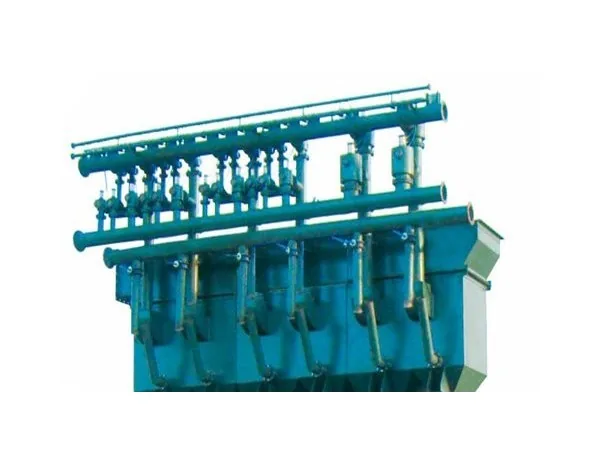


Thickener and filter press designed as one water balance, so the circuit stays closed under load.
A slime water circuit has two halves that must be sized together: the thickener that concentrates the slime, and the filter press that dewatered it. Sized separately, one always becomes the bottleneck.
Dehui supplies GNS-series thickeners and XMZ filter presses as a matched pair, with the underflow concentration, press cycle time and overflow clarity calculated as a single balance against your slime production rate.
Getting this balance right is what allows a plant to run with minimal fresh water intake and no liquid discharge — which is increasingly a licence condition rather than a cost-saving choice.
Indicative values. Final figures follow from your coal analysis and site conditions.
| Parameter | Typical Range |
|---|---|
| ParameterTypical requirement Thickener size | Set by slime tonnage and required underflow concentration |
| Underflow solids | Typically 300–500 g/L for efficient press feeding |
| Overflow clarity | Must suit return to the washing circuit |
| Flocculant dosing | Automatic, proportional to feed solids |
| Press capacity | Matched to thickener underflow, not to plant tonnage |
Underflow concentration drives press performance. Too dilute and the press spends its cycle pumping water; too thick and the feed line blocks.
Automatic flocculant dosing proportional to feed solids pays for itself quickly on plants with variable feed.
Raking mechanism torque is the usual mechanical weak point. It should be specified against the actual settleability of your slime.
From the settling rate of your slime, the tonnage to be thickened and the required underflow concentration. Settling tests give the rate; the rest is a mass balance.
The thickener overflows, water has to be discharged, and fine coal leaves the plant with it. It is a yield loss as well as an environmental issue.