


Get a Quote
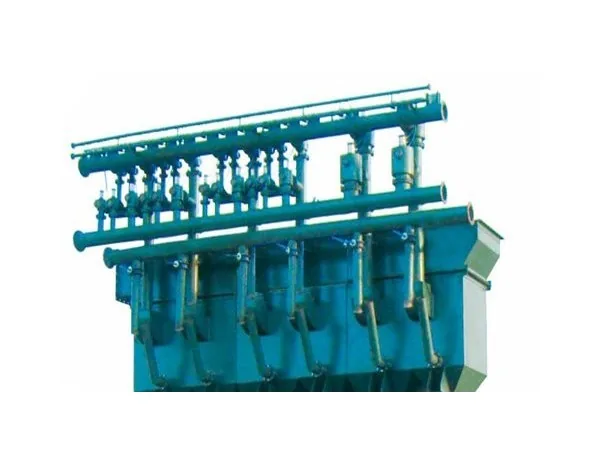


Hard rock duty where abrasion resistance and cavity shape decide service life more than headline capacity.
Aggregate and ore duty is harder on equipment than coal. Silica content, compressive strength and abrasion index are all higher, and the consequences of a poorly matched crusher show up quickly as worn liners, distorted product shape and frequent stoppages.
Dehui supplies jaw crushers for primary reduction, spring cone crushers for secondary and tertiary duty, and ball mills where the flow sheet requires fine grinding. Selection starts from the rock's abrasion index and work index, not from throughput alone.
We also supply the vibrating screens that size the crushed product, which means the crusher and screen cut points can be balanced together instead of being bought separately and reconciled on site.
Indicative values. Final figures follow from your coal analysis and site conditions.
| Parameter | Typical Range |
|---|---|
| ParameterTypical requirement Compressive strength | Up to 300 MPa for cone and jaw duty |
| Abrasion index | Drives liner material and expected wear life |
| Product shape | Cubicity requirement points to cone rather than impact crushing |
| Capacity | 50–500 t/h, set by cavity and closed-side setting |
| Screen interface | Cut points balanced with the sizing screens |
Closed-side setting controls product size far more precisely than feed rate. Operators often run too open and compensate with extra screening, which costs more than correct setting.
Liner profile changes as it wears, so throughput and product size drift over a liner campaign. Scheduled checks keep the product in specification.
For abrasive rock, the cheapest machine per tonne of capacity is rarely the cheapest over five years.
Cone crushers give better cubicity and lower wear cost on abrasive rock. Impact crushers suit softer, less abrasive material and where shape is critical.
Yes — crusher, screens, conveyors and structural steel can be supplied as one coordinated package.