


Get a Quote
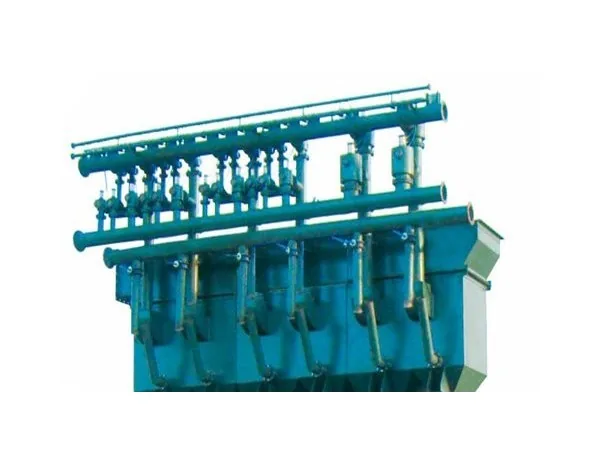


Gangue is not always waste. Crushing and re-washing can recover residual clean coal and turn the remainder into a saleable aggregate product.
In many coal fields, the reject stream still contains measurable clean coal locked in composite particles. Crushing the gangue to liberate those particles, then re-washing, recovers coal that would otherwise be landfilled — and reduces the volume that has to be disposed of.
The economics depend on three numbers: how much coal is locked in the gangue, what size liberation requires, and what the recovered coal is worth against the cost of crushing and re-washing it.
Dehui approaches gangue recycling as a small preparation circuit: controlled crushing to the liberation size, jigging to separate the liberated coal, and dewatering of both products. The remainder becomes a graded aggregate for construction fill or brick making.
Indicative values. Final figures follow from your coal analysis and site conditions.
| Parameter | Typical Range |
|---|---|
| ParameterTypical requirement Liberation size | Determined by petrographic or sink-float testing of the gangue |
| Recoverable coal | Measured, not assumed — it drives the whole business case |
| Crushing stage | Usually single stage to the liberation size |
| Re-wash unit | Small jig matched to the recovered coal tonnage |
| Residue use | Aggregate, fill or brick feedstock — decides final sizing |
Test the gangue before committing to a plant. Liberation size and recoverable coal content vary enormously between seams and between washing plants.
A small jig is often the right re-wash unit here: the tonnage is low, the feed is variable, and jigs tolerate variation better than dense medium circuits.
Residue disposal is usually the hidden cost. If the crushed residue has a saleable use, the project economics change substantially.
It varies too widely to generalise — from a few percent to well over twenty percent depending on the original washing efficiency and the seam. It must be measured on your material.
Often yes, subject to local specification for fill or brick feedstock. Grading and sulphur content are the usual constraints.